The List
Red Flags, Green Flags, and the Subtle Art of Not Ignoring Your Gut

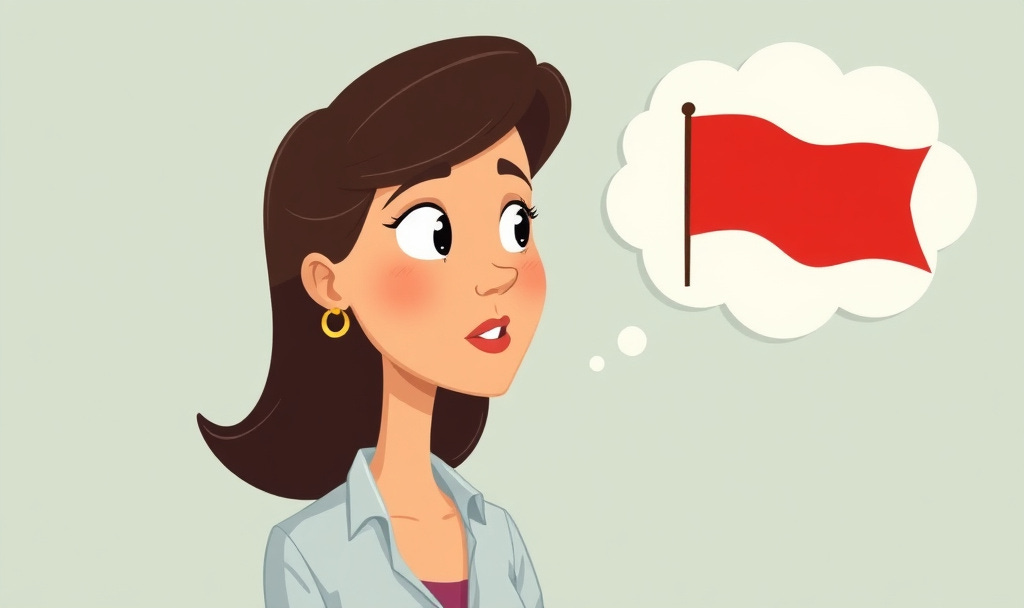
When getting to know someone, it’s easy to focus on chemistry and that initial spark. However, what matters most isn't a great first impression; it's how someone consistently shows up over time.
That’s why paying attention to “flags” matters. These are the signals that encourage you to ask an important question: Does this relationship feel healthy and sustainable, or could these patterns create challenges in the future?
The Red Flags
Some signs provide data points that you should simply not ignore. If your date talks exclusively about themselves without asking you a single question, that’s not just nerves. It can actually signal low relational awareness. Research suggests that mutual self-disclosure is foundational for building intimacy (Reis & Shaver, 1988) and if they’re not curious about you, they’re not as likely to build anything with you.
Another red flag: shutting you down when you express yourself. If you feel dismissed, interrupted, or subtly silenced, that’s a problem. Healthy relationships depend on open communication (Gottman & Levenson, 2000). If it feels difficult to open up now, it’s unlikely to become easier on its own. Without intentional effort, the communication patterns established early in a relationship tend to persist.
Yet another flag: When someone can’t or won’t acknowledge your feelings. Over time, this creates emotional distance. It is important that your partner validates you, as it leads to shared understanding.
Mismatched relationship goals also deserve immediate attention. If one person is looking for something casual and the other is envisioning a shared Google calendar and holiday plans, that’s not a “let’s see where it goes” situation, it’s a divergence in life direction.
And finally: being talked down to, criticized, or emotionally diminished. Decades of research shows that contempt and criticism are among the strongest predictors of relationship breakdown (Gottman & Levenson, 2000).
The Green Flags
One of the clearest green flags is a subtle linguistic shift rom “I” to “we.” It sounds small, but it reflects something big: psychological interdependence. When someone starts naturally integrating you into their worldview and life, it signals growing emotional investment.
Find a partner who asks about your needs, hopes, and goals. This kind of curiosity isn’t just important, it’s essential. It shows they’re thinking about compatibility, not just chemistry.
Another green flag: good communication. Not the “we talked for four hours” kind (though that can be a plus), but the “we can talk about hard things” kind. Conflict is inevitable and how you handle it as a couple matters. Partners who communicate with care and respect are far more likely to build lasting relationships (Gottman & Levenson, 2000).
And of course, active listening and validation. When someone pauses, really hears you, and reflects understanding, it creates emotional safety.
So… What Now?
Approach your dates will curiosity. Let yourself observe, not just perform. And yes, give people some grace, as early dating is anxiety-provoking for most of us.
But here’s the key: grace does not mean ignoring patterns. It’s important to notice how you feel around someone and whether their behavior aligns with the kind of relationship you actually want.
The goal isn’t just to find someone who likes you, but someone who knows how to relate to and care for you.
References
Gottman, J. M., & Levenson, R. W. (2000). The timing of divorce: Predicting when a couple will divorce over a 14-year period. Journal of Marriage and Family, 62(3), 737–745.
Reis, H. T., & Shaver, P. (1988). Intimacy as an interpersonal process. In S. Duck, D. F. Hay, S. E. Hobfoll, W. Ickes, & B. M. Montgomery (Eds.), Handbook of personal relationships: Theory, research and interventions (pp. 367–389). John Wiley & Sons.